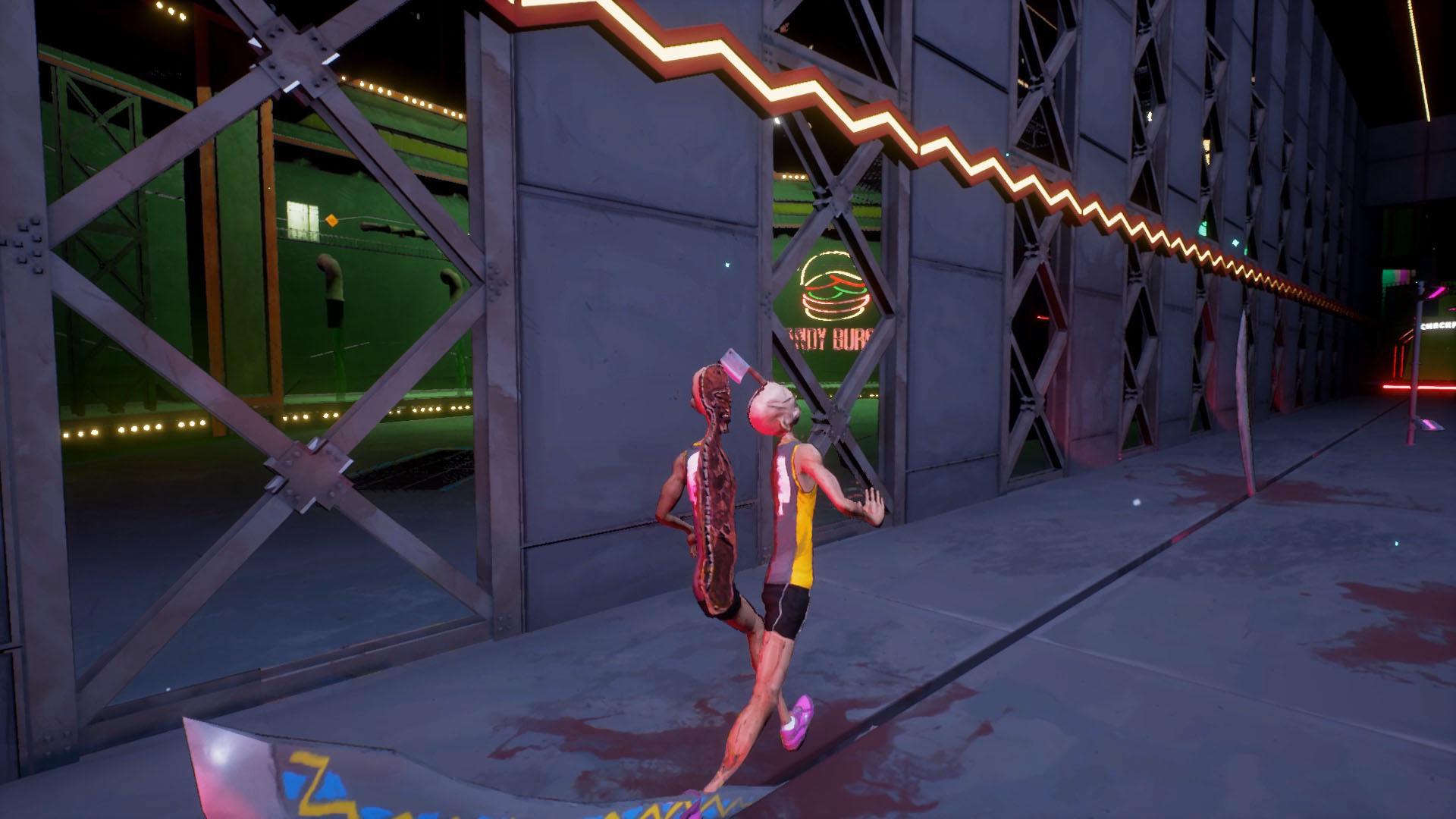



Welcome to the Blood Party! Play alone or together with up to 4 people in this whacky 3d platformer. Try to survive deadly game shows, throw your head, run, crawl without legs, burn, get shmashed and chopped up. Work together or against your friends, customize your zombie and build levels to share them via Steam Workshop.


The “113” revision introduced a unique quirk: extremely efficient error recovery . Unlike MP4 files, which would corrupt entirely if a single byte went missing, an MKV 113 file could be missing entire chunks and still play. If you downloaded a movie via BitTorrent and only got 97% of the data, a standard file would be a slideshow of glitches. An MKV 113 file? It would simply skip the missing parts, like a CD player hopping over a scratch.
This turned the 113 build into the gold standard for scene releases. For nearly two years, if you downloaded a Blu-ray rip from a top-tier release group, there was a 90% chance it was wrapped in an MKV 113 container. Then, something strange happened. The format evolved. New versions (1.2, 1.3, 2.0) fixed bugs and added features like Blu-ray menu support and better streaming. But die-hard users refused to upgrade. mkv 113
It is a reminder that the best technology isn’t always the newest. Sometimes, the best technology is the one that, even when slightly broken, refuses to let go of your data. MKV 113 doesn’t need an update. The “113” revision introduced a unique quirk: extremely
The mystery of the “Ghostspeak” subtitles? A signed integer overflow error in the UTF-8 parser. The changing CRC? A flaw in how the 113 spec handled metadata caching on FAT32 drives. The “113 minute” bug? A hard-coded default value in the header parser that developers forgot to remove. An MKV 113 file
To the uninitiated, “MKV” simply refers to Matroska Video, an open-source multimedia container format known for holding an unlimited number of video, audio, and subtitle tracks in a single file. The “113” is just a revision number. But in the lore of the web, 113 is not a number. It is a threshold . The story of MKV 113 begins not in a Silicon Valley boardroom, but in the chaotic peer-to-peer networks of the late 2000s. As broadband speeds climbed, the .avi format—the workhorse of the era—began to show its age. It couldn’t handle modern codecs like H.264 efficiently. Enter MKV.